
ants
Why Argentine Ants Invade Fresno Kitchens Each Summer Every Summer
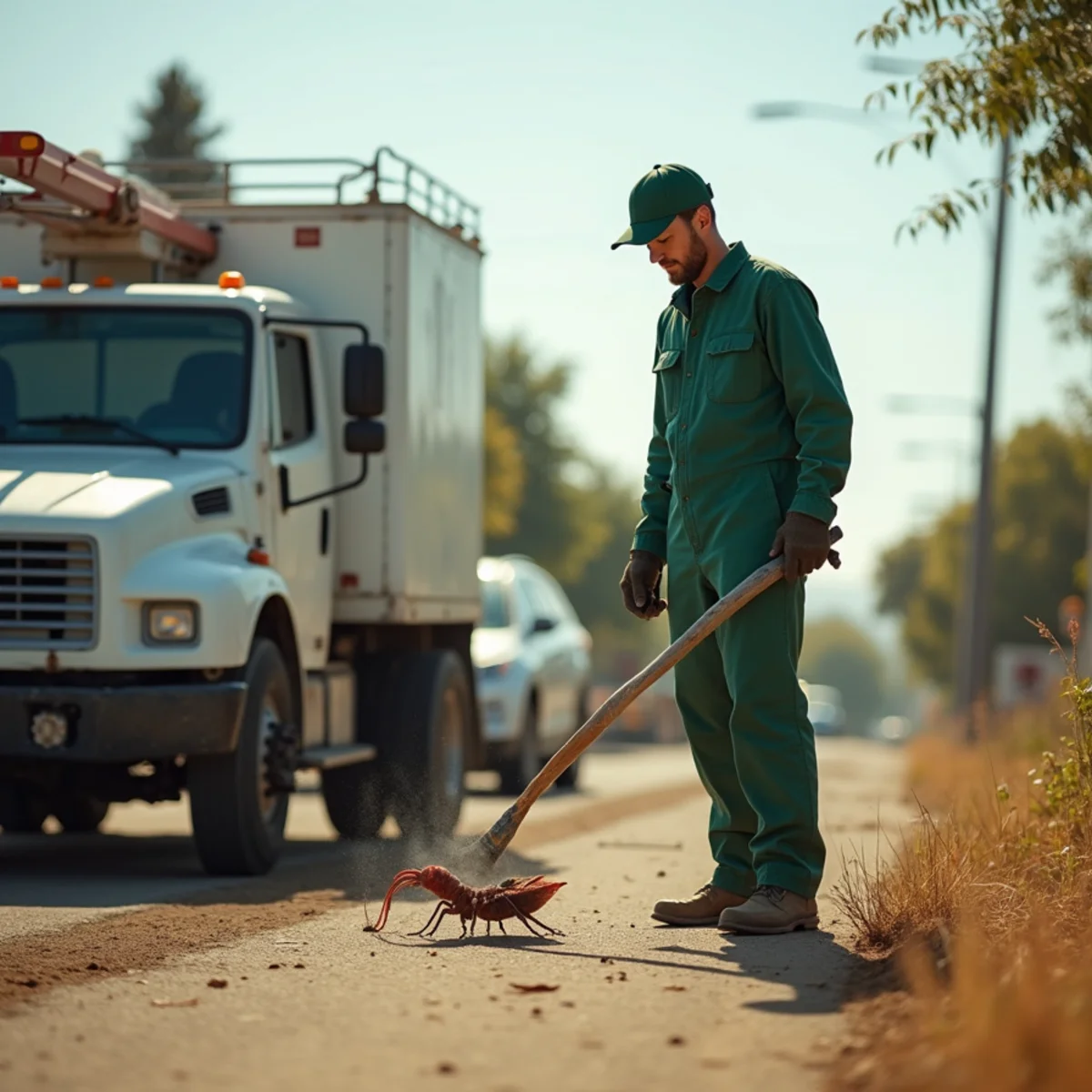
Fresno’s hot, dry summers drive Argentine ants indoors hunting water and sweets, so trails appear at the kitchen sink and bathroom first. They form massive, multi-queen colonies, which is why store spray backfires: it scatters the colony into new trails. Slow-acting bait that workers carry back to the queens is what actually works.
The culprit is almost always the Argentine ant
That thin, relentless line of small brown ants marching from the window to the sugar bowl is the single most common pest call in Fresno, and the species behind it is nearly always the Argentine ant. These ants are tiny, uniformly dark brown, and move in distinct trails rather than wandering randomly.
What makes them so hard to beat is their social structure. Unlike many ants that keep one queen and one defended nest, Argentine ants form enormous "supercolonies" with many queens and many interconnected nests that cooperate instead of fighting. A single colony can stretch across yards, blocks, and entire neighborhoods, sharing workers freely.
Because the colony is so large and decentralized, the ants you see in the kitchen are a vanishingly small fraction of the whole. Kill them and the colony does not even notice. This is the key fact that explains why the usual homeowner response fails and why a source-based strategy is the only thing that holds.
It helps to know that Argentine ants are not native; they arrived in North America over a century ago and spread aggressively because their cooperative, multi-queen colonies out-compete and displace local ant species. In much of California they are now the dominant ant, which is why nearly every summer ant call in Fresno traces back to them. That dominance is also why they are relentless: there is almost always another colony nearby ready to move into any territory a treatment clears, so prevention has to be ongoing rather than a one-time knockout.
Need help now, not later?
Call (321) 496-4080
Why does summer heat push them indoors?
Argentine ants live outdoors, in the soil, mulch beds, irrigation boxes and under pavers, and they forage for two things: moisture and sugar. Through most of the year the yard supplies both. But Fresno summers are long, dry, and routinely triple-digit, and when the heat bakes the landscape and irrigation slows, the outdoor water and food dry up.
That is when the foragers come inside. Your kitchen and bathroom offer exactly what the baked yard no longer does — a dripping faucet, condensation under the sink, pet water, crumbs and sugar. This is why the first trails almost always appear at the kitchen sink, the dishwasher, or the bathroom, following plumbing lines in from the exterior wall.
Homes on the farm edge or backing onto vineyards and orchards feel it worst, because irrigated agricultural ground feeds gigantic outdoor colonies with a near-endless supply of workers to send. The summer invasion is not a sign of a dirty house; it is a predictable response to Valley heat and the water your home holds.
There is a seasonal rhythm within the summer, too. Early in the season the ants are largely outdoors, and a well-timed exterior barrier can keep them from ever establishing indoor trails. By the peak of the heat, when every colony is pushing for water at once, indoor trails are harder to prevent and the emphasis shifts to baiting. This is why Fresno homeowners who treat the perimeter in late spring tend to have a far quieter July than those who wait until the kitchen is already lined with ants.

Why store-bought spray makes it worse
The instinct is to reach for a can of ant spray and hit the trail. With most ants that helps. With Argentine ants it often makes the problem noticeably worse, and understanding why saves a lot of frustration.
Most retail ant sprays are repellent contact killers. They kill the foragers you can see on the counter, but they also leave a chemical barrier the colony detects and avoids. A multi-queen supercolony responds to that disturbance by "budding" — splitting off new queens and satellite nests and rerouting its trails around the treated area. You end up with more trails, in more rooms, than you started with.
So the spray gives a satisfying few minutes of dead ants followed by a worse infestation a week later. It treats the symptom — the visible trail — while leaving every queen alive and prompting the colony to multiply its entry points. This is the trap that keeps Fresno homeowners cycling through cans of spray all summer without ever getting ahead.
The budding problem is worth picturing concretely. When a repellent product cuts a trail, the colony does not simply retreat; it responds to the disruption by producing new reproductive ants and splitting into additional satellite nests, each capable of starting its own trails. So the homeowner who sprays the window line in June can find three new trails at different windows by July — not because the house got dirtier, but because the spray fragmented one colony into several. It is the pest-control equivalent of hitting a problem with a hammer and watching it multiply.
The science of bait: targeting the queens
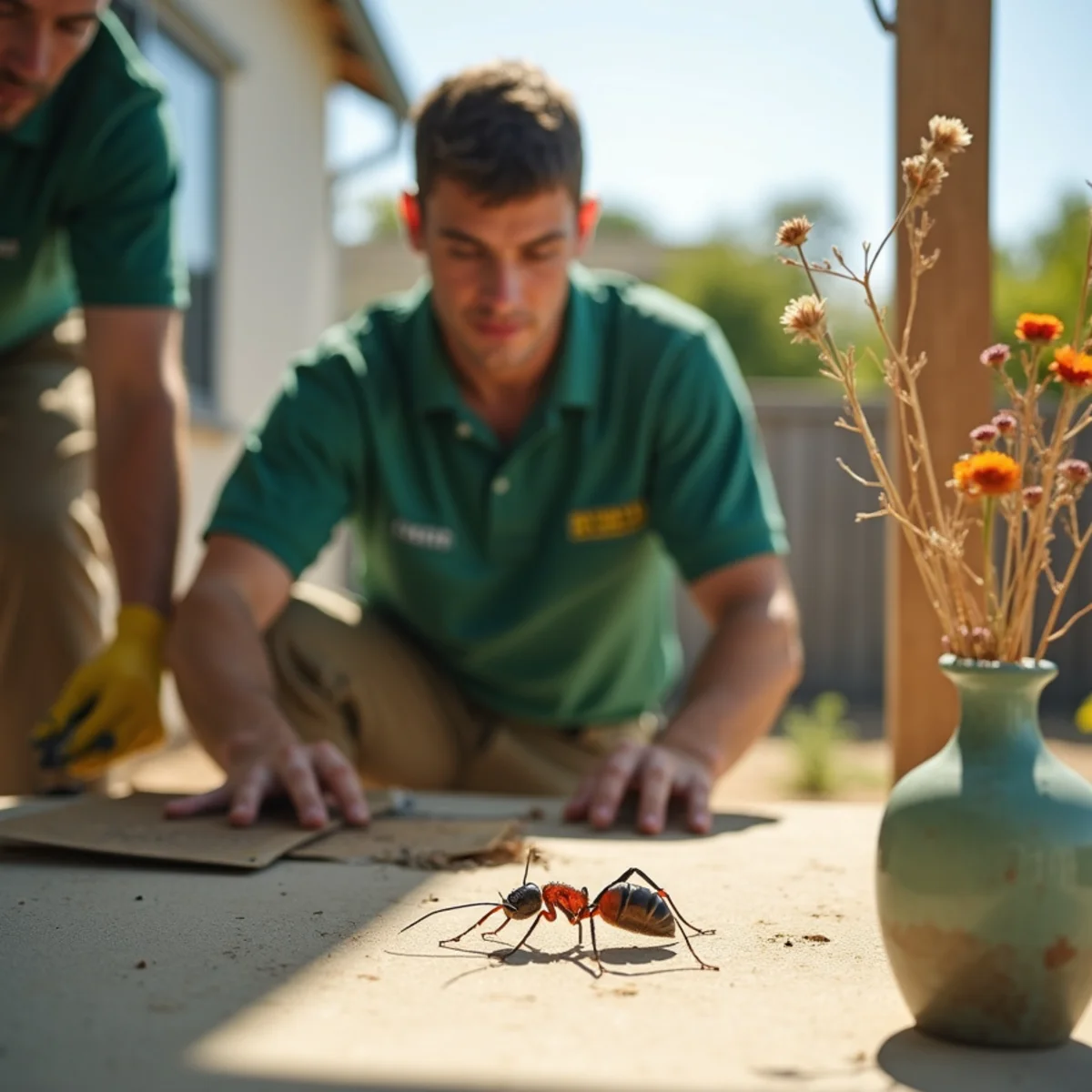
The approach that works does the opposite of spray. Instead of killing foragers on contact, professional ant control uses slow-acting bait — a sweet or protein matrix laced with a product that takes time to act. The foragers find it, decide it is food, and carry it back to share with the colony, including the queens.
The delay is the point. Because the active ingredient works slowly, the workers live long enough to distribute it through the colony's food-sharing network before anyone dies. Over several days to a couple of weeks, the queens stop producing and the colony collapses from the inside — the entire reason bait beats spray against a multi-queen species.
Alongside interior bait, a non-repellent exterior barrier is applied at the foundation and entry points. Unlike repellent spray, a non-repellent product does not warn the ants off; they pass through it, pick it up, and carry it home too. Treating the outdoor sources — mulch beds, valve boxes, under pavers, along fence lines — finishes the job, because the nest lives outside and will keep sending workers until it is addressed. This is the core of an ant-control-services program built for Fresno summers.
Bait selection matters more than people expect. Argentine ants switch their preference between sweet and protein or grease-based foods depending on the season and the colony's needs, so a bait that works in spring may be ignored in late summer. A technician reads which the ants are currently taking and matches the bait accordingly, and will rotate it if the colony's appetite shifts. This responsiveness — watching what the ants actually accept and adjusting — is part of why professional baiting outperforms a single store-bought bait station left on the counter.
What to do right now
While you arrange professional treatment, a few steps slow the invasion and keep you from making it worse:
- Do not spray the trail. Repellent spray scatters the colony and multiplies your trails. Resist the can.
- Wipe trails with soapy water. This removes the invisible scent trail the ants follow and buys you some relief without triggering budding.
- Cut off the water and food. Fix dripping faucets, dry the sink at night, store sugar and pet food sealed, and wipe up crumbs and spills promptly.
- Find the entry point. Follow the trail to where it enters — usually a gap around a pipe, window, or outlet on an exterior wall — and note it for sealing.
- Leave any bait alone. If bait has been placed, do not wipe it up or spray near it; you want the ants feeding and carrying it home.
- Trim vegetation off the house. Shrubs and limbs touching the wall give ants a bridge straight indoors.
These measures buy time, but they do not reach the colony. Because Argentine ants recur every Fresno summer, a recurring plan that refreshes the exterior barrier before each heat wave is what keeps the kitchen clear year after year.
One honest expectation to set: because the colony lives outdoors and the Valley never gets a hard freeze to reset the population, no treatment makes a property permanently ant-proof. The realistic goal is control, not eradication — keeping the trails out of the house through the season and knocking back the colonies closest to the foundation. Homeowners who understand that up front are far happier with the results than those expecting one visit to end ants forever, which is simply not how a dominant, farm-fed species behaves.
That realism cuts the other way too, as encouragement: control is genuinely achievable and does not require living with ants all summer. The combination of patient baiting, a maintained non-repellent barrier, treating the outdoor sources, and basic denial of indoor water and food reliably keeps the trails out of the kitchen through the hottest months. The trick is consistency and timing rather than intensity — getting the barrier in place before the peak and letting the bait do slow work beats any amount of frantic spraying once the ants are already lined up on the counter.
Frequently asked questions
Summer ant trails in a Fresno kitchen are a colony problem, not a counter problem, and the can of spray under your sink is quietly making it worse. Baiting the queens and treating the outdoor nest is what finally ends the parade. Call J&J Pest Control at (321) 496-4080 for ant control that holds through the heat.
Call (321) 496-4080